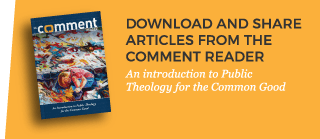
What the military can teach Congress, news outlets, and churches about winning back the faith of the people.
Source: The Mystery of Trust | Comment Magazine
I commend to you this interesting article on the issue of trust in institutions. It can be found in Comment Magazine, a publication I hadn’t heard of until it was referenced during the February 11th 2021 edition of the Slate Political Gabfest. Editions of the Gabfest can be found here:
https://slate.com/podcasts/political-gabfest
The Comment article is dated January 12th, 2021 and written by Amanda Ripley, who writes books and magazine articles on “human behaviour and public policy” according to her bio. One of her books, “The Smartest Kids in the World–and How They Got That Way” was a New York Times bestseller.
Ripley begins with the counter-intuitive observation that public trust in the American military–and militaries around the globe, is both startlingly high and quite resilient. A 2020 Gallup poll found 72 percent of Americans trust the military “a great deal or quite a lot”. In France, the number is higher. Similar polling can be found in the United Kingdom, Italy and Spain.
That means trust in the military in many countries is higher than it is for institutions like the church, financial institutions, the media and government.
The question, of course is why? Ripley says the history of trust in her country is mostly a story of scarcity. Yet without trust in a society’s institutions, little of significance can be accomplished:
“It’s not an exaggeration to say that this may be the most important question of our time. Society grinds to a halt without trust, as we get brutally reminded every news cycle. We cannot contain a pandemic unless we trust politicians and scientists. We cannot educate our children unless teachers, families, and mayors have some level of faith in one another. We cannot keep our communities safe without trust between police and the public. We will never reckon with climate change without trust. Trust has become the nonnegotiable prerequisite to a functioning civilization in the modern world”
And yet some institutions are notably able to maintain consistently high levels of trust. In an attempt to answer the ‘why’ question, Ripley surveys the research and finds it both “interesting and incomplete”.
However, in her mind, it all comes down to three equalities: ability, benevolence and integrity.
Ability seems fairly obvious. If the public believes an institution is able to perform its basic functions at a high level of confidence, that will generate public trust.
Ripley sees benevolence as that sense an institution has your best interests at heart. She says integrity implies having strong values and adhering to those values rigorously.
She cites the examples of Google and Uber who may get high marks for ability but low marks for trust and integrity. Ergo, they are not well trusted. Also cited was higher levels of trust for small businesses, which may benefit from people believing their owners have stronger values and are less motivated by pure profit.
Trust becomes hugely important as governments across Canada attempt to grapple with how best to manage the economy during the COVID-19 epidemic. The public is being asked to do things for the common good that would have been seen as unthinkable a year ago. Compliance in the practices that will save our lives depends on people having trust in their governments.
My observation from my time in Saskatchewan politics was that the public will support most reasonable things a government proposes, provided they are still willing to give said government and its leader the benefit of the doubt. Once that is gone, little more can be accomplished.
Ripley’s article certainly puts more meat on the bones of my anecdotal sense of how trust works in politics.



 Ian Hanna