

When you are in government, you need people who are able, in one or two sentences, to articulate a broad strategic vision; someone to explain what it is you’re doing and how today’s “what” fits into the broader “why”.
However, in order to avoid a communications crisis, you also need people (or at least one person) who is buried in the details, looking for those unintended consequences that busy people don’t or can’t see. To get good at this skill requires a special mind, able to assess all of the potential consequences and assess risk. A little bit of experience also helps.
This week in the UK, we saw a government fail at the details while trying to achieve goals related to its broader vision. UK Labour was forced into a series of major concessions to avoid a full scale revolt on long-anticipated welfare cuts.
And every journalist was handed a gift when the final vote aligned with the first year anniversary of Labour’s general election victory:
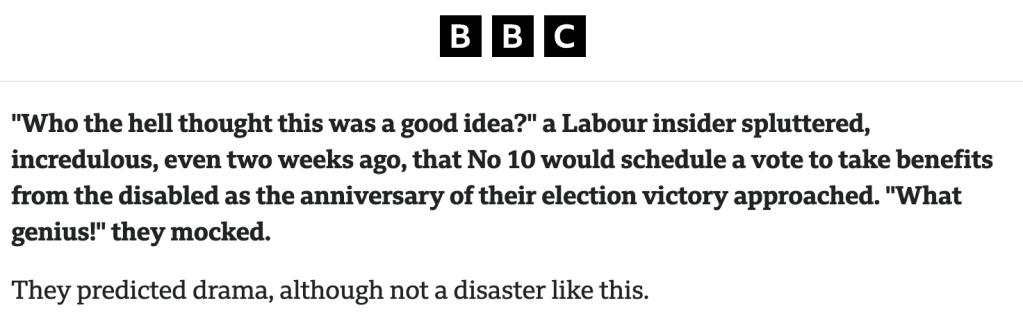
Things can look stupid and obvious retrospectively.
The essence of excellence in political communications is anticipating the “fail” before it happens.
The drama in the UK reminded me of recent events in Saskatchewan.
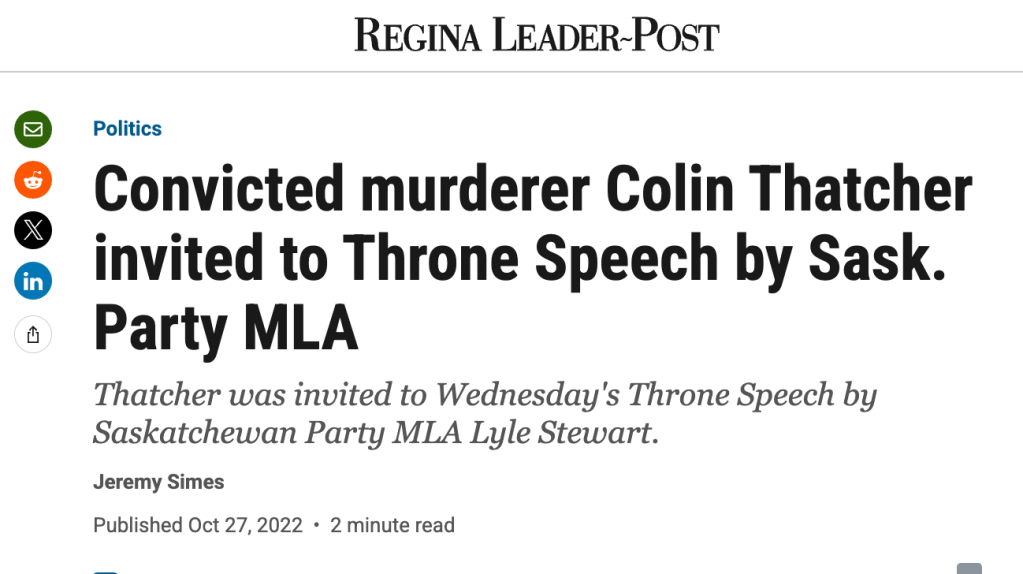
Back in my day, someone was responsible for looking at event guest lists and looking for potential problems and quietly solving said problems. Apparently that no longer happens. And while anyone is free to attend the Saskatchewan Legislature, an invitation from a sitting member or the government is another matter.
In the Saskatchewan example, you can write it all off as an example of an older government, losing control over the fundamentals.
In the UK example, it’s perhaps more troubling this his happening on the first anniversary of a Labour government.
 Ian Hanna