

For the life of me, I can’t seem to sort out the aggregate political benefit behind Saskatchewan Premier Scott Moe’s tepid reaction to Donald Trump’s introduction, withdrawal (and potential re-introduction) of tariffs against Canada and Mexico.
Politicians are many things, but they generally transactional on the whole. They will seldom take stupid positions that cost them votes. By failing to mirror the rapid, decisive and significant measures introduced by his Council of the Federation colleagues in other provinces, Premier Moe may be maintaining his right-wing base. However, he risks alienating a groundswell of Canadian nationalism and those Saskatchewan voters fond of putting their province first. It just doesn’t make any sense to me.
Some have chosen to compare Moe’s response to the historical avatar to appeasement in the face of bullying, Neville Chamberlain: https://thestarphoenix.com/opinion/columnists/tank-saskatchewan-could-be-the-strongest-voice-in-american-trade-conflict
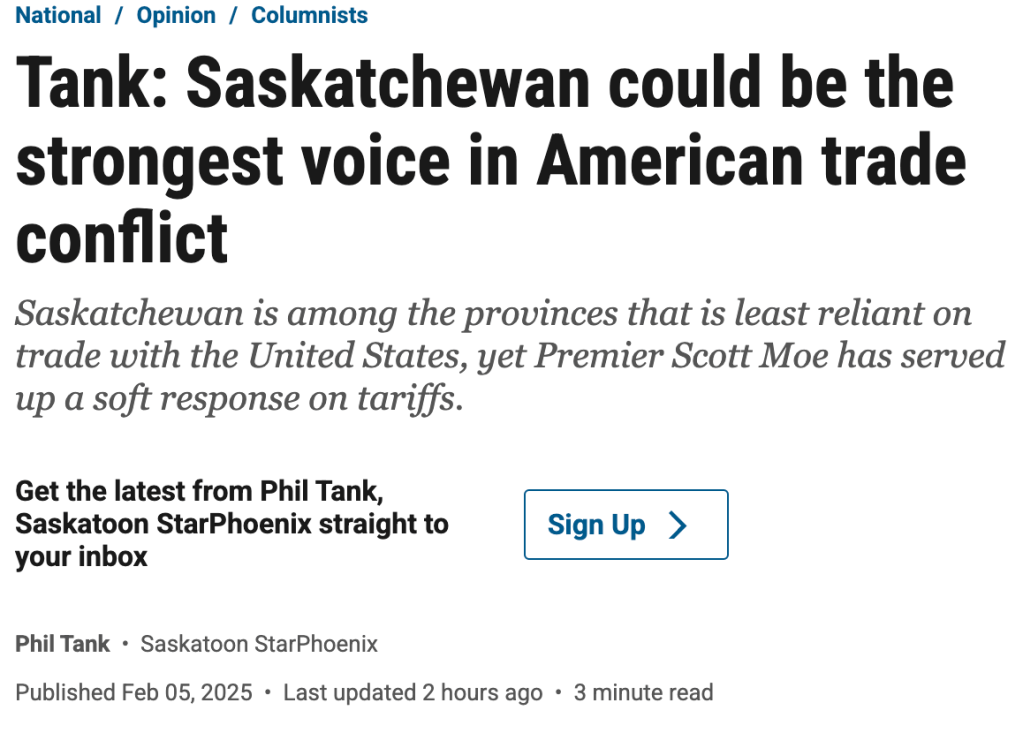
Others point to the folly of accepting at face value Trump’s rationale for the tariffs, suggesting change to Canada’s Criminal Code might be far more effective than the appointment of something as nebulous as a “fentanyl Tsar”.https://leaderpost.com/opinion/columnists/mandryk-moes-disappointment-with-trump-tariffs-far-too-tepid-appeasing.
As Mr. Mandryk points out, the very notion of attempting to appease Donald Trump is folly:
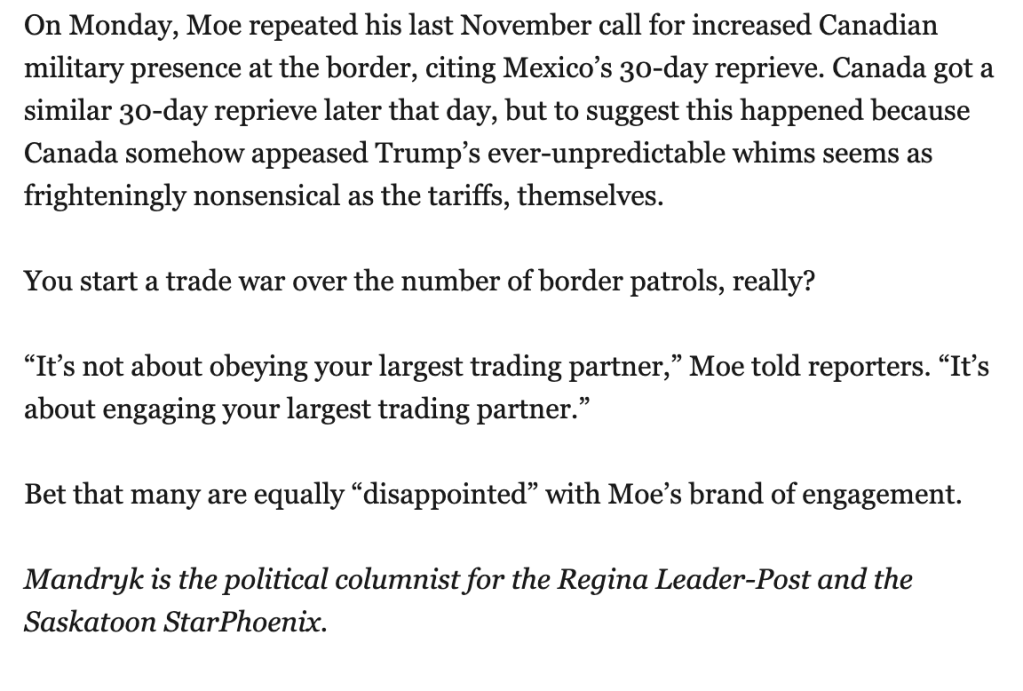
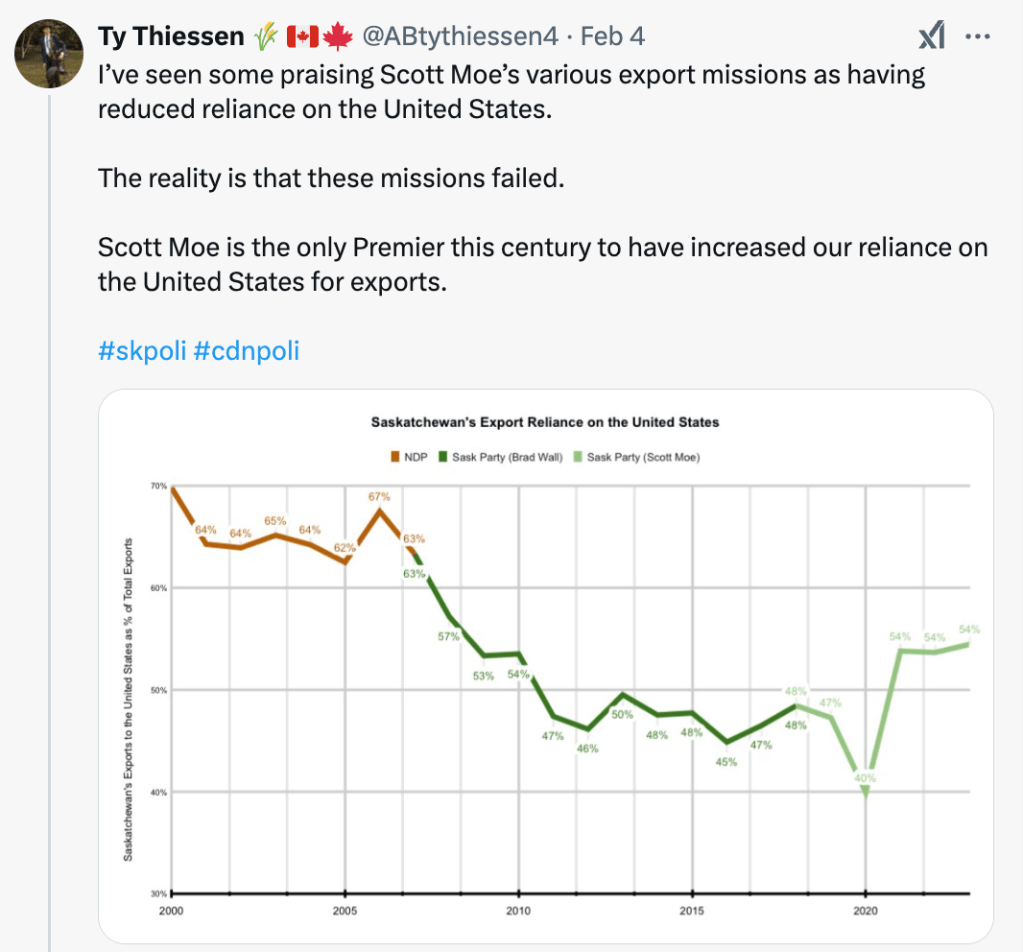
The Premier’s chief apologists attempted to deflect critics of the tepid tariffs response by highlighting Moe’s efforts to diversify the province’s export markets.
Yes, but….
….on the one hand, these efforts started well before Moe’s residency in Rm. 226. On the other hand, these efforts under Moe’s supervision have not been all that successful:
So, the fundamental question remains: Scott Moe has shown no hesitation to come off the bench on various and sundry issues. Why not this, particularly given the conspicuous political advantages of a more aggressive response? I have two potential answers: one from an expert in UK politics, the other is my own.
Polly Mackenzie was a Chief of Staff to Nick Clegg in the coalition government with the Conservatives. In a recent Times of London podcast, Mackenzie had an important reminder to political observers: Politicians don’t think like normal people. They are fiercely tribal, and party loyalty means more than anything. In this context, Moe may believe his loyalty to the Saskatchewan Party’s dominant narrative, his loyalty to the Premier of Alberta and his hatred of the federal Liberal government are simply more important than throwing his lot in with those advocating a more aggressive response. According to Mackenzie, the issues matter quite a bit more to ordinary voters while loyalty beats all other considerations for political leaders.
Most of politics is dominated by hyper-partisan thinking. Tribal loyalties matter more than the substantive issues…I think it’s fundamental to all observers of politics to note how important tribal loyalty is. And I think for voters, the issues matter quite a lot more”.
(How to Win an Election Podcast, 04 Feb 2025. Times of London, 23 min mark.)
My possible answer may be less prosaic but arguably equally worthy of consideration. The current Premier of Saskatchewan may have simply checked out. The job is onerous. He may actively be considering departure sooner as opposed to later. Given that, he just may not be interested in expending the energy and political capital on one more big fight. The tepid response may be just a symptom of fatigue.
Something to consider.
Despite the 30 day suspension, the tariffs story is far from over. We will be dealing with this story–or ones just like it, again and again over the next few years.
To end on a positive note, at least this week has highlighted Canada and Saskatchewan’s importance to US agriculture and the energy sector. Even Senator Chuck Grassley ( R-IA) was awakened from his normal geriatric slumber long enough to conclude potash was important to corn producers in the great state of Iowa and maybe he should be asking for a tariff exemption.
Like Emerson, the people of Saskatchewan are thankful for such small mercies.
 Ian Hanna